
Starting a Holladay Resident Search
Holladay sits inside Salt Lake County, but it is not the county seat. That split matters. A modern owner search belongs with the Salt Lake County Assessor; a recorded transfer belongs with the County Recorder public search; a voter status question belongs with Vote Utah. Historical work reaches the County Archives, the University of Utah’s directory collection, and the City Library Archives. No one of these sources is a complete residents directory.
Pick the narrowest useful search. An address is usually the best start because the assessor can turn it into a parcel number. A full name and date of birth can narrow the voter form. An approximate year points toward a directory, obituary, census, or archive index. Keep the source date and the exact spelling beside every result.
- Search the county parcel by owner name, address, or parcel number.
- Save the situs address, mailing address, parcel ID, and legal description.
- Use Vote Utah to test a supplied name and address, remembering that protected records may be absent.
- Search Utah Courts Xchange for a party, case number, and public disposition when a court trail is relevant.
- Move to the Recorder, library, Archives, or a GRAMA request when the online result stops.
That sequence keeps an owner, registered voter, court party, and historical householder from being treated as the same person without proof. A useful Holladay residents directory result names the record type beside the name.
Offices Behind Holladay Records
The useful records offices sit in three layers. Holladay City Hall holds municipal planning, license, code, council, and Historical Commission material. Salt Lake County holds the property, deed, elections, tax, and archive systems. Utah offices hold vital records, court systems, professional licenses, and statewide searches. Their records overlap, but their legal purpose does not.
Salt Lake County Recorder
2001 South State Street, Ste N1-600
Salt Lake City, UT 84190
385-468-8145
Salt Lake County Elections
2001 South State Street, Ste S1-200
Salt Lake City, UT 84114
385-468-7400
For local records, Holladay City Hall is at 4580 S. 2300 E. Community and Economic Development uses 801-527-3890. The County Archives is an appointment channel at 385-468-0820. These contacts are useful when a form or index gives only a partial answer.
Holladay’s Parcel Search Fields
The county’s current assessor form is simple, while the classic query exposes more ways to work a street. Use the current Find a Parcel form when the target is known. Its address field uses an autocomplete choice, and the parcel number follows the displayed format. The classic page is helpful for a wider scan.
| Field | How it helps |
|---|---|
| Owner | Last name, first name; the classic search advises at least three letters. |
| Address | Choose the county’s autocomplete value for a current situs address. |
| Parcel Number | Use the parcel key; the classic search also accepts a first-seven-digit block prefix. |
| Street components | Frontage number, direction, street name or number, and street type or direction. |
| Property Type | Narrows the classic property search when the type is known. |
A parcel card may show the owner, mailing and situs addresses, legal description, property type, value fields, tax district, exemptions, year built, building details, sketch, transfer history, and map links. Those fields describe a property relationship. They do not list every person who sleeps there.
Note: Save the county’s parcel date because public information may be 24 hours old or older and can lag a recorded change.
Current Holladay Resident Sources
Different rolls answer different questions about present-day Holladay. The table below is a working map, not a claim that any source lists every household. The voter search is an individual status tool, and the business list is a dated public snapshot.
| Source | People or places shown | Keeper | Access |
|---|---|---|---|
| Parcel card | Owner of record, situs, mailing clue | Salt Lake County Assessor | Free search |
| Recorded documents | Grantors, grantees, legal descriptions | County Recorder | Index plus paid copies |
| Voter status | Registered voter tied to supplied fields | Utah and county elections | Individual lookup |
| Planning and licenses | Applicants, owners, principals, project contacts | Holladay | Forms, notices, request |
| Business entities | Principals, agents, entity status | Utah Commerce | Public search |
Use the Holladay resident lookup workflow when the goal changes from a place to one person. For a whole street, preserve one worksheet row per parcel and keep ownership, voter status, business affiliation, and historical occupancy in separate columns. A careful residents directory never hides those distinctions.
Utah Voter Status, Carefully Checked
Vote Utah’s voter search displays first name, last name, date of birth, street address, city, and ZIP fields. It requires JavaScript. The public voter category can include name, physical and mailing address, year of birth, party affiliation, vote history, voter ID number, districts, active or inactive status, and update information, subject to the current 2026 privacy transition.
Full date of birth, driver-license or state-ID number, and Social Security number remain protected. An At-Risk registration is unavailable to the public. Former Private or Withheld classifications do not necessarily continue automatically after the 2026 change, so verify the live county privacy instructions before treating a missing result as evidence that no voter is registered.
The Vote Utah lookup form shows the fields used for an individual status check.
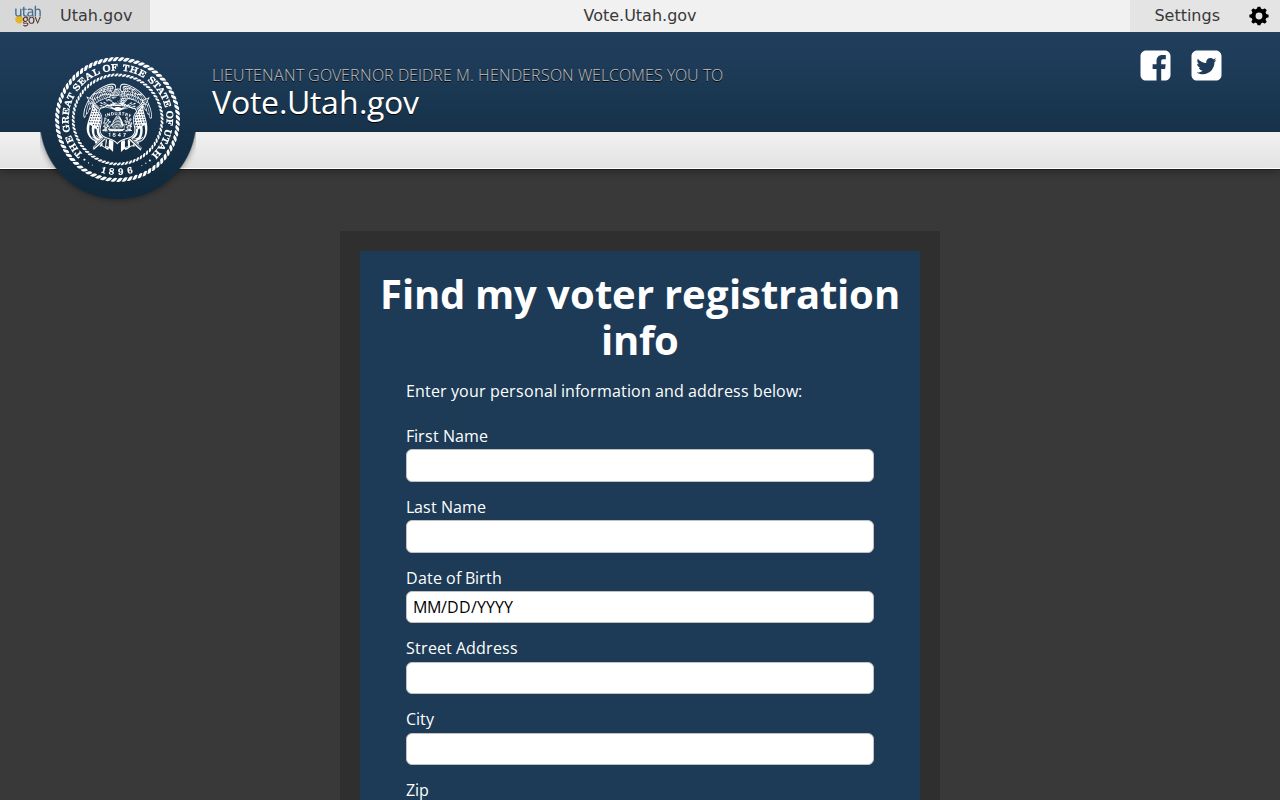
Read the field, not the story. Vote history shows elections in which a person cast a ballot. It never shows ballot choices, and a voter status result is not proof of current physical occupancy.
Recorder Documents and Property Watch
The Recorder public search can connect a parcel to its current owner, legal description, recorded-document count, document number, recording date, type, and cross-references. Example types include warranty deeds, plats, and amendments. The legal description displayed for taxation is an index clue, not a replacement for the recorded instrument.
Images and deeper chain-of-title services sit behind Data Services. Occasional access is listed at $5 for 24 hours; recorded copies are listed at $2 per page, with a certified-copy charge of $5 plus $2 per page. The Recorder’s Property Watch is free and can send email or text alerts, but the county warns that not every document will attach to a property and that an alert is not a title determination.
The county’s Recorder public-search terms explain the parcel and document index.
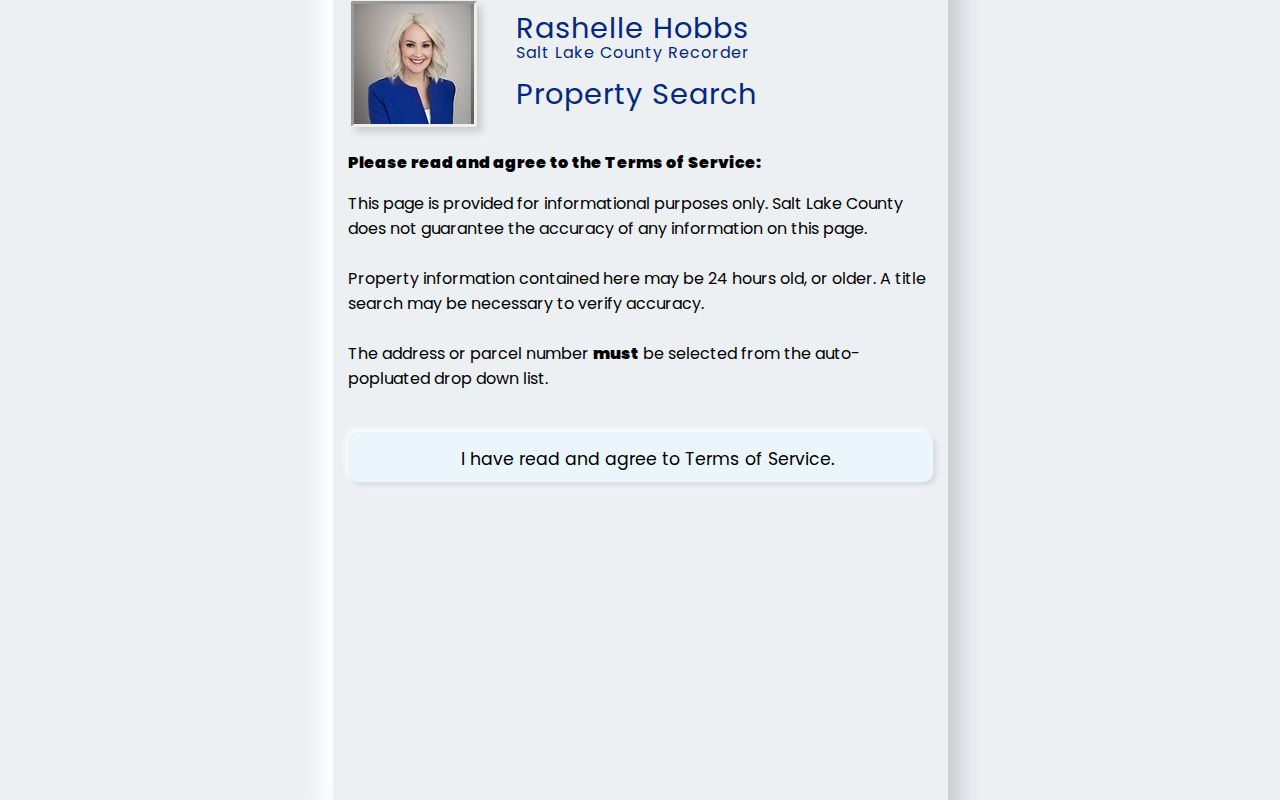
To go backward, read the latest deed’s grantor and grantee, recording date, document number, and legal description. Search the earlier owner as grantee. Repeat with the legal description when a street label fails. That is the title trail behind a Holladay residents directory entry.
Courts, Probate, and a Name Trail
Holladay Justice Court is at 4580 S. 2300 E. and uses the statewide Utah Courts Xchange search layer. Xchange fields include jurisdiction, case type, case number, party surname or company, first name, birth date when present, citation details, court scope, and a date range. A result can show county, court, case type, filing date, party role, case history, and public documents.
A guest account is listed at $10, with searches at $0.20 and documents at $1. A result set stops at 500. Most district cases are complete after the local CORIS connection, while pre-connection material can be incomplete. Sealed, expunged, juvenile, adoption, and other private matters do not appear. Probate can help an heir search because public appointments and orders may name representatives, heirs, attorneys, and property, but private filings can still be withheld.
Question: Does a court party address prove where a person lives? No. It is an address filed in that case. Use it as one dated anchor and seek the official file from the court clerk when the distinction matters.
Holladay’s Historical Directory Shelf
The University of Utah Marriott Digital Library’s Utah City Directories Collection is arranged by place, alphabetic and geographic use, and publisher. Its entries cover residents, streets, firms, organizations, institutions, and advertisements. Holladay is a spatial part of the collection, so a volume titled Salt Lake City Suburban may be more useful than a title bearing Holladay alone.
Confirmed R. L. Polk suburban coverage includes 1957, 1958, 1959, 1960, 1962 through 1976, a combined 1977–1978 volume, and 1980. The collection listing also shows 1979, but the history note does not independently confirm it. The 1961 suburban volume was not confirmed. Sampled Salt Lake City Polk volumes include 1896, 1897, 1906, 1909, 1915, 1926, 1929, and 1935 through 1942. The full collection treatment belongs in the Holladay city directories page.
The Salt Lake County Assessor search shows the owner, address, and parcel starting points used in local research.
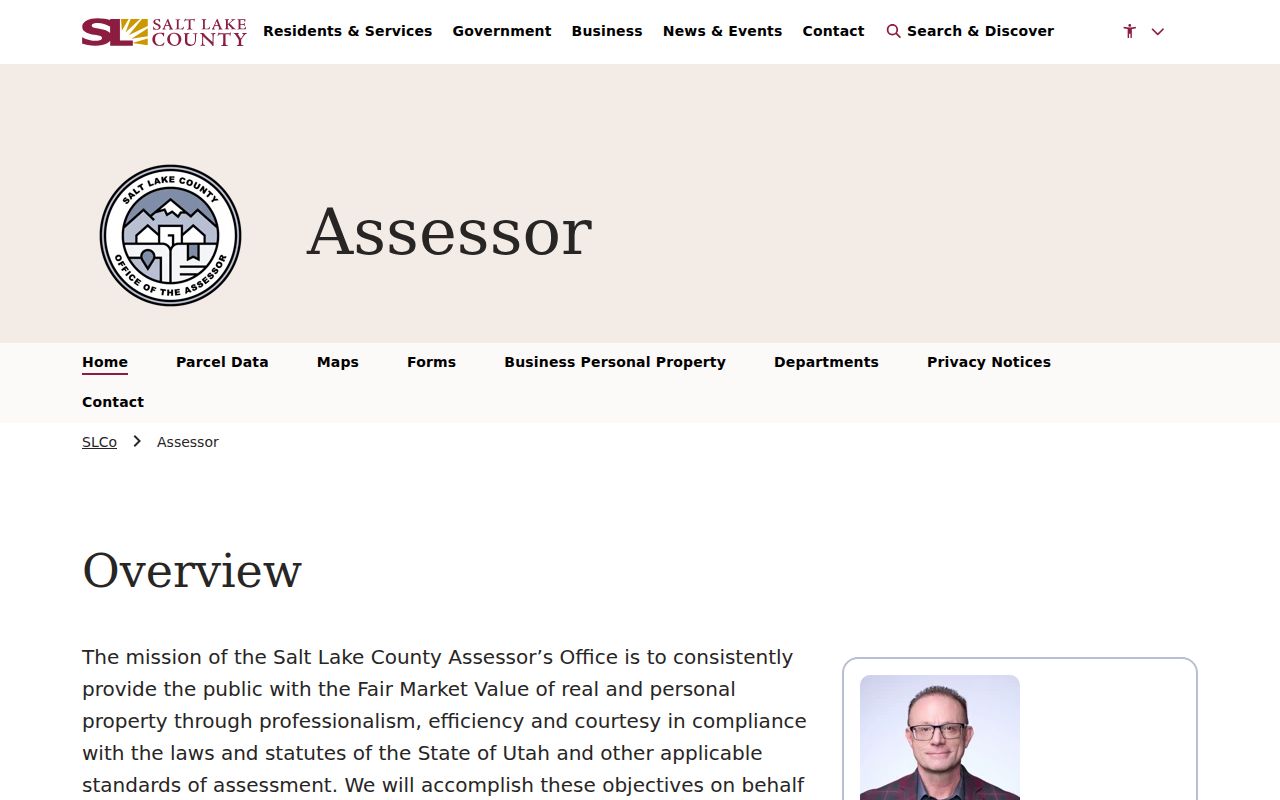
Read an alphabetic entry with its street section, record the publisher’s abbreviations, and compare nearby years. A listed householder is a historical association with an address, not proof of a current resident.
Holladay Archive Dates and Detours
Salt Lake County Archives provides unusual depth for a city whose municipal records began late. Online searches cover deaths from 1847 to 1949, births from 1890 to 1911, marriage licenses from 1887 to 1904, tax appraisal cards from the 1970s through 1991, and land certificates from 1851 to 1895. Deeds, plats, maps, proof-of-residence records, court material, and planning records may require browsing or an appointment.
The City Library Archives holds newspapers on microfilm, local clippings, photographs, maps, legal documents, and genealogy resources. HeritageQuest is available through the library. FamilySearch’s Utah State Archives Records collection spans 1848 to 2001 with county and date limits that vary by series. Use a citation, book or series name, and image reference rather than a bare surname.
- Roll
- A list maintained for a purpose, such as registered voters or tax accounts.
- Index
- A finding aid that points to a document; it may not include the document image.
- Parcel
- A mapped land unit identified by a county parcel number and legal description.
- Criss-cross directory
- A reverse directory that starts with a street or address and points to a listed household or phone entry.
Note: County Archives research is by appointment, Marriott browsing is digital, and City Library materials are generally read in the building.
Business and License Cross-Checks
When a person is tied to a shop, practice, or company, public business records can add a lawful second anchor. Utah Commerce Registered Entities Search accepts all or part of an entity name and an entity-type choice. The broader Commerce search describes principals, registered agents, assumed names, UCC filings, and certificates. A registered or principal address is a business address, not automatically a home address.
Holladay business-license applications ask for a DBA, location, mailing address, local contact, opening date, activity, property owner or management, owner or partner names, principal officer, parcel ID, zone, and approvals. The January 2025 new-business list is a dated snapshot with business owner and location fields. DOPL license verification can supply a profession, city, license number, status, and detail page for regulated work.
| Record | Strong clue | Limit |
|---|---|---|
| Assessor | Owner and parcel relationship | Does not list all occupants |
| Commerce | Principal or agent tied to an entity | Business address may differ from home |
| DOPL | Licensee, city, profession, status | One person can have multiple records |
When Online Holladay Records Stop
Utah’s Government Records Access and Management Act, or GRAMA, is the fallback for a specific public record not exposed online. A request should identify the custodian, address or parcel, record type, and date range. State guidance lists the Open Records Portal, email, fax, mail, and in-person delivery. The normal response period is up to 10 business days, and fees may recover actual cost under Utah Code Title 63G, Chapter 2.
For Holladay, ask City Hall for a building-permit history, planning file, code case, business-license register, or Historical Commission record. A public searchable building-permit index was not located. For county material, ask the Recorder or Archives for the series, book, document, or appointment route. A precise request for inspection or copies is more useful than asking an office to find a person outside its records.
Holladay Privacy and Safety Boundaries
Public records are not a census of physical occupants. The assessor identifies owners, voter tools identify registered voters, court systems identify parties, and old directories identify listed householders in a particular year. DMV address data is restricted by the Driver’s Privacy Protection Act, utility and delivery accounts are not public resident lists, and Safe at Home participants may use a substitute address. Utah Code §76-5-106.5 also makes a repeated course of conduct that causes fear or distress a stalking concern.
Lawful personal use. Use Holladay records for family history, reconnecting, estate research, civic records, or correcting your own information. Do not use a name and address trail to stalk, harass, intimidate, or harm anyone.
For a final check, contact the record custodian. The Assessor handles parcel issues, the Recorder handles recording questions, court clerks handle case indexes, elections staff handle status and privacy, and OVRS handles vital-record eligibility. The Utah Safe at Home program and voter At-Risk protections are designed to keep qualifying residential information out of public view. A responsible residents directory stops where the official record stops.